


.jpg)


.jpg)

.png)
Desert Date Benefits and Uses
Desert Date: Benefits, Uses, Nutritional Value, Side effects and Medicinal Properties
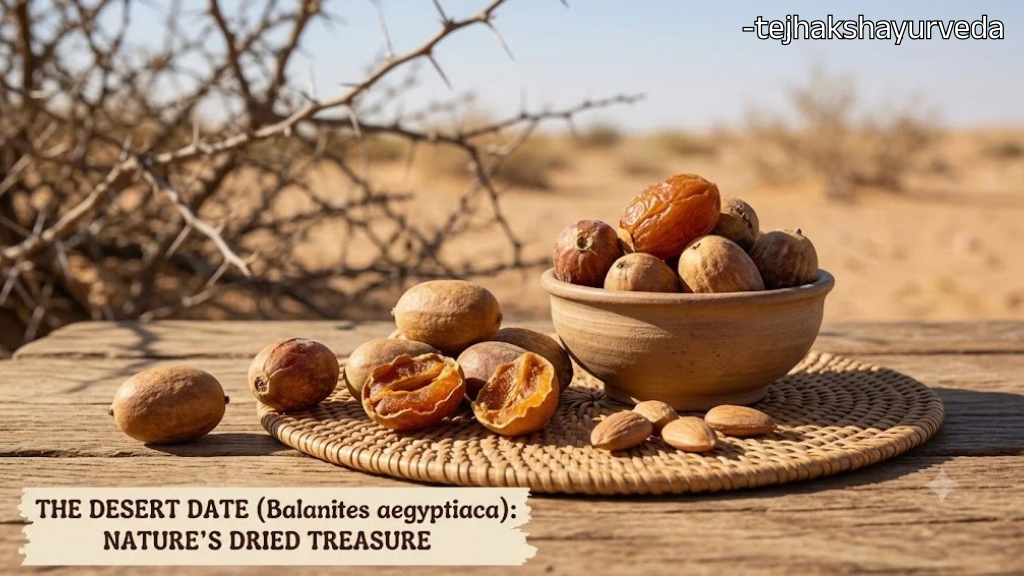
Desert Date is a useful plant found in dry and tropical regions of Africa and parts of Asia. The tree is known for its fruits, leaves, bark, roots, seeds, and other plant parts, which have been used traditionally for food and various purposes.
The scientific name of Desert Date is Balanites aegyptiaca. It is also known by different local names in different regions. The fruit has a hard outer covering and contains a kernel inside.
In traditional practices, different parts of the Desert Date tree have been used for generations. Modern research has also examined the plant for its nutritional and bioactive compounds.
In this article, we will discuss Desert Date benefits, Desert Date uses, nutritional value, medicinal properties, possible side effects, and other important information.
What Is Desert Date?
Desert Date is a thorny tree that belongs to the Zygophyllaceae family. It is mainly found in hot and dry regions and can grow even where water is limited.
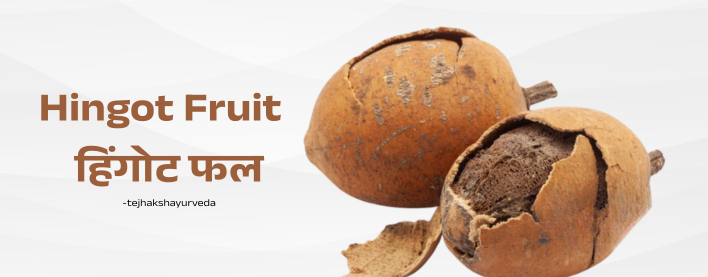
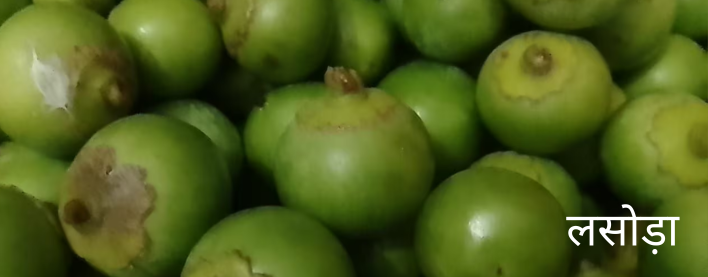
The tree produces small, oval-shaped fruits. As the fruit ripens, its color and appearance change. Inside the fruit, there is a soft pulp and a hard seed or kernel.
Different parts of the Desert Date tree have been used traditionally for various purposes. The fruit can be eaten or processed, while the seeds can be used to extract oil. The leaves, bark, and other parts of the tree are also used in some traditional practices.
The scientific name of Desert Date is Balanites aegyptiaca. Because of its nutritional value, traditional uses, and naturally occurring plant compounds, it has also been studied for its potential agricultural and medicinal properties.
Desert Date Common Names
Desert Date is commonly known by several names depending on the region and language.
Some commonly used names include:
- Desert Date
- Hingot
- Balanites
- Balanites aegyptiaca
- Egyptian Balanites
- Soapberry tree
- Heglig
Local names can vary considerably, so the scientific name Balanites aegyptiaca is useful when identifying the plant.
Nutritional Value of Desert Date
Desert Date (Balanites aegyptiaca) contains a variety of nutrients and natural plant compounds. However, its nutritional value can differ depending on the fruit's maturity, growing conditions, variety, and how it is processed.
The fruit and seeds may contain:
- Carbohydrates – Provide energy to the body.
- Dietary Fibre – Supports a healthy digestive system.
- Natural Fats and Oils – Especially present in the seed kernel.
- Minerals – The amount and type may vary depending on growing conditions.
- Plant Protein – Mainly found in the seeds.
- Natural Sugars – Present in the fruit pulp.
- Phenolic Compounds – Natural plant compounds with antioxidant activity.
- Saponins – Plant compounds naturally found in several parts of the Desert Date tree.
The seed kernel is particularly useful because it contains oil and other nutrients that have been studied for food, traditional, and industrial uses.
It is important to note that the exact nutritional content of Desert Date can vary from one sample to another. Processing and preparation methods can also affect its nutrient composition.
Benefits of Desert Date / Desert Date benefits
Desert Date has been traditionally valued for its nutritional and practical uses. Research has investigated several properties of Balanites aegyptiaca, although more human studies are needed before making strong health claims.
1. Contains Plant-Based Nutrients
Desert Date fruit and seeds contain various nutrients and naturally occurring plant compounds. Depending on the part consumed, they may provide carbohydrates, fats, fibre, minerals, and other compounds.
Including a variety of nutrient-rich plant foods in the diet can contribute to overall dietary diversity.
2. Source of Natural Plant Compounds
Desert Date contains bioactive compounds such as saponins, flavonoids, and phenolic compounds.
These substances are being studied for their biological activities. However, laboratory findings do not automatically mean that consuming Desert Date will provide the same effects in humans.
3. Traditionally Used in Herbal Practices
Different parts of the Desert Date plant have a long history of traditional use.
Traditional preparations have included the fruit, bark, roots, leaves, and seeds. Uses vary between communities and should not be confused with medically proven treatments.
4. May Have Antioxidant Properties
Studies on Desert Date extracts have reported antioxidant activity. Antioxidants are compounds that can help neutralize certain free radicals in laboratory settings.
The presence of antioxidant compounds is one reason Desert Date medicinal properties continue to be investigated.
More research, particularly well-designed human studies, is needed to understand the practical health effects.
5. Desert Date May Support Traditional Digestive Uses
In some traditional systems, preparations made from Desert Date have been used for digestive complaints.
However, traditional use is not the same as established medical treatment. Anyone with persistent digestive symptoms should consult a healthcare professional rather than relying on herbal preparations alone.
6. Seeds Provide Plant Oil
Desert Date seeds contain oil that has attracted attention for food, cosmetic, and industrial applications.
The oil contains various fatty acids, and its composition makes it useful for research and potential commercial applications.
7. Useful in Dry and Arid Regions
One of the important characteristics of the Desert Date tree is its ability to grow in harsh and dry environments.
The tree can provide fruits, seeds, fuel, and other useful resources in areas where agricultural conditions are challenging.
This makes Desert Date tree benefits relevant not only to nutrition but also to agriculture and local livelihoods.
Uses of Desert Date
Desert Date (Balanites aegyptiaca) has been used traditionally for food, oil, household purposes, and other applications. Different parts of the plant may be used in different ways depending on the region.
1. Food Use
The ripe fruit pulp is eaten in some regions. People may prepare or process the fruit in different ways according to local traditions.
Since the fruit and seeds have different properties, proper identification and preparation are important.
2. Desert Date Seed Oil
Oil can be extracted from the seeds of the Desert Date fruit. This seed oil has been studied for possible use in food, cosmetics, and industrial products, depending on how it is processed and used.
3. Traditional Herbal Uses
Different parts of the Desert Date plant, including the fruit, leaves, bark, roots, and seeds, have been used in traditional herbal practices.
The method of preparation and purpose can vary from one region to another.
4. Soap and Cleaning Uses
Desert Date contains natural compounds called saponins. These compounds can produce a foaming effect when mixed with water.
Because of this property, some parts of the plant have traditionally been used for washing and cleaning.
5. Agricultural Uses
Desert Date can grow well in hot and dry areas with limited rainfall. The tree can provide useful resources such as fruits, seeds, wood, and other plant materials.
It can therefore be valuable to communities living in dry and semi-arid regions.
6. Cosmetic and Industrial Uses
Desert Date seed oil and other parts of the plant are being studied for potential cosmetic and industrial applications.
The final use depends on factors such as processing, product formulation, quality, and safety requirements.
Desert Date Medicinal Properties
The medicinal properties of Desert Date have been investigated in traditional medicine and scientific research.
Research has examined extracts and compounds from Balanites aegyptiaca for properties such as:
- Antioxidant activity
- Antimicrobial activity
- Anti-inflammatory activity
- Potential metabolic effects
- Traditional digestive uses
- Other biological activities
It is important to understand that much of the evidence comes from laboratory studies, animal research, or traditional use. These findings do not prove that Desert Date can prevent or treat a particular disease in humans.
More clinical research is needed to establish appropriate doses, effectiveness, and safety.
Side Effects of Desert Date / Desert Date Side Effects
Although Desert Date has traditional uses, consuming or using plant preparations may not be suitable for everyone.
Possible side effects may include:
- Stomach discomfort – It may cause stomach irritation or digestive problems in some people.
- Nausea – Some people may feel sick after consuming it.
- Allergic reactions – Sensitive people may experience an allergic reaction.
- Problems from concentrated extracts – Strong extracts or supplements may have stronger effects than the natural fruit or plant parts.
- Medicine interactions – Desert Date preparations may interact with some medicines.
The safety of the fruit, seeds, leaves, bark, and other parts may be different. Some natural compounds in Desert Date can affect the body, especially when taken in large amounts.
Therefore, avoid using concentrated Desert Date extracts or supplements without proper guidance from a doctor or qualified health professional.
Who Should Be Careful With Desert Date?
People who are pregnant or breastfeeding, children, older adults taking multiple medicines, and individuals with chronic health conditions should consult a healthcare professional before using medicinal preparations made from Desert Date.
People who are already taking medicines should also ask their doctor or pharmacist about possible interactions.
Natural does not always mean risk-free. The safety of an herbal product depends on the plant part, amount, preparation, purity, and individual health conditions.
Frequently Asked Questions About Desert Date
1. What is Desert Date?
Desert Date is the common name for Balanites aegyptiaca, a thorny tree found mainly in dry and tropical regions of Africa and parts of Asia.
2. What are the benefits of Desert Date?
Desert Date provides various nutrients and plant compounds. It has also been traditionally used for food, oil, and herbal preparations. Scientific research is investigating its antioxidant and other biological properties.
3. What is Desert Date used for?
Desert Date is traditionally used as food and for producing seed oil. Different parts of the tree are also used in traditional practices, cleaning applications, agriculture, and other purposes.
4. What are the medicinal properties of Desert Date?
Research has investigated antioxidant, antimicrobial, anti-inflammatory, and other biological properties of Balanites aegyptiaca. However, more human research is required to confirm specific medicinal benefits.
5. Is Desert Date safe to consume?
Safety depends on the plant part, preparation, quantity, and individual health conditions. Concentrated extracts should not be used without appropriate professional guidance.
6. Is Desert Date the same as a regular date fruit?
No. Desert Date is Balanites aegyptiaca, while common dates come from the date palm, Phoenix dactylifera. They are different plant species.
7. Does Desert Date have nutritional value?
Yes. Different parts of the fruit and seed contain nutrients and plant compounds. The exact nutritional profile can vary according to maturity, growing conditions, and processing.
Conclusion
Desert Date (Balanites aegyptiaca) is a traditional multipurpose plant with nutritional, agricultural, and practical importance. Its fruit and seeds contain various nutrients and naturally occurring plant compounds, while the tree is well adapted to dry environments.
The main Desert Date benefits and uses include its use as a food source, seed oil production, traditional herbal applications, cleaning uses, and agricultural value. Research has also explored its antioxidant and other biological properties.
However, many claims about the medicinal properties of Desert Date are based on traditional use or early scientific research. More human studies are needed to confirm specific health benefits and determine safe and effective doses.
If you plan to use Desert Date as a herbal remedy or concentrated supplement, especially if you take medicines or have a medical condition, consult a qualified healthcare professional first.
Disclaimer: This article is for general educational and informational purposes only. It is not medical advice and should not be used to diagnose, treat, or prevent any disease.
.png)
 (2).png)
.png)
.png)
.png)
.png)
.png)
.png)
.png)
.png)
.png)
.png)
 (1).png)
 (1).png)
.png)
.png)
.png)
 (1).png)
 (2).png)
 (3).png)
.png)
.png)
.png)
.png)
 (1).png)
.png)
.png)
.png)
.png)
 (2).png)
 (3).png)
 (1).png)
 (1).png)
 (1).png)
 (2).png)
 (1).png)
.png)
 (2).png)
.png)




.png)
.png)
 (2).png)
 (4).png)
 (5).png)
 (6).png)
 (7).png)
.png)
 (2).png)

.png)